
By Britt Larson, Functional Health, IFBB Pro. February 3, 2025
More Than Just a Muscle Booster
Creatine has been the King Dingaling of the supplement world for decades, EVERYONE ASKS ABOUT IT, and for good reason. It’s one of the most well-researched, safest, and most effective supplements for building muscle and boosting athletic performance. But here’s the thing – creatine isn’t just for bodybuilders.
If you think creatine is only useful for those gym dudes screaming out, “LIGHT WEIGHT BABYYY!” while trying to deadlift, think again. Whether you train hard, hit the gym occasionally, or don’t exercise at all, creatine has some serious benefits for your brain, metabolism, and overall health. In fact, researchers are now looking at creatine for everything from cognitive function to aging, injury recovery, and even mental health.
So, let’s break down what creatine actually does, who should take it, and why you might want to take more than you think.

Why Creatine Is a Staple in the Bodybuilding World
We’ll start with the obvious reasons why creatine is a non-negotiable for athletes and lifters:
1. More Strength & Power
- Creatine helps your body produce more adenosine triphosphate (ATP) -aka the energy currency of your muscles.
- More ATP = more explosive power, better performance, and the ability to push out extra reps. Extra reps? More muscle. Love that for us.
2. Faster Muscle Growth
- Creatine increases cell volumization (muscle hydration), which enhances protein synthesis and muscle repair.
- More water inside your muscles = fuller, thicker-looking muscles and better recovery between workouts.
3. Reduced Fatigue & Faster Recovery
- Studies show creatine reduces muscle damage and inflammation after intense training.
- It also helps replenish muscle glycogen stores faster, which means better recovery and less soreness.
But what if you don’t care about bro-ing out and lifting heavy? What if you just want better energy, a sharper brain, or a healthier body? That’s where creatine gets even more interesting, keep reading, we’re getting to more good stuff. 🙂

The Unexpected Benefits of Creatine (Even If You Don’t Work Out)
1. Brain Health & Cognitive Function
Creatine isn’t just a muscle fuel – it’s a brain fuel!
- Your brain uses a massive amount of ATP for memory, focus, and mental processing.
- Research shows creatine improves cognitive function, especially in sleep-deprived people or those under stress.
- There’s also evidence that creatine supplementation may reduce the risk of neurodegenerative diseases like Parkinson’s and Alzheimer’s.
2. Mood & Mental Health
- Some studies suggest creatine may help with depression by enhancing serotonin and dopamine function.
- It’s also been shown to improve mental resilience and stress tolerance – useful for anyone dealing with burnout or chronic fatigue.
3. Cellular Energy & Aging
- As we age, ATP production declines, leading to fatigue, slower recovery, and muscle loss.
- Creatine helps mitigate age-related muscle decline and keeps your body’s energy systems running smoothly.
- Studies suggest it may even support mitochondrial function, which is key for longevity.
4. Gut Health & Inflammation
- Some new research suggests creatine may have anti-inflammatory effects in the gut.
- It could help support immune function and reduce oxidative stress at the cellular level.
5. Metabolism & Blood Sugar Control
- Creatine may help improve glucose metabolism, making it a useful tool for people with insulin resistance or metabolic issues.
- Some research suggests it enhances glycogen storage in muscles, helping regulate blood sugar levels.

How Much Creatine Should You Take?
The standard recommendation is 3-5g per day, which is enough to saturate muscles over a few weeks. However, there’s growing evidence that higher doses (15-20g daily) might provide even greater benefits, especially for brain health, faster muscle saturation, and anti-inflammatory effects.
Higher-Dose Creatine (15-20g): Who Might Benefit?
- Athletes who train intensely (to saturate muscles faster).
- People with cognitive issues (brain fog, mood disorders, or neurodegenerative concerns).
- Older adults (to combat muscle and cognitive decline).
- Those recovering from injuries or dealing with chronic inflammation.
- Those in heavy studies, needing a brain-boost.
How to Implement Higher Dosing Safely:
- Instead of taking 15-20g all at once (which might cause stomach issues), split it into 3-4 smaller doses throughout the day.
- Example: 5g in the morning, 5g pre-workout, 5g post-workout, 5g before bed.
- If you’re new to creatine, start with 10g/day for a week, then adjust based on tolerance.

Types of Creatine: Which One Should You Take?
Not all creatine is created equal, and supplement companies love marketing “fancier” versions that usually don’t offer anything special (and ESPECIALLY love to jack up prices for us ladies). BUT! Here’s the breakdown for creatine, specifically:
1. Creatine Monohydrate (The Gold Standard)
- The most studied, most effective, and cheapest form.
- Micronized versions (Creapure®) mix better in water and reduce stomach discomfort.
- This is the one you want.
2. Creatine HCl (Hydrochloride)
- Marketed as being more soluble in water, can be more pricey, and no major research shows it’s superior.
- *Could be* useful if you have digestive issues with monohydrate.
3. Buffered Creatine, Creatine Nitrate, Creatine Ethyl Ester
- These are mostly marketing gimmicks – no proven advantage over monohydrate. Capitalism loves a flashy gimmick to rake in that dough!
- They’re often more expensive with no additional benefits.
Bottom line? Stick with Creatine Monohydrate unless you have specific digestive issues.

Common Myths & Misconceptions
❌ “Creatine Causes Kidney Damage”
- This myth won’t die. Studies on healthy individuals show zero negative effects on kidney function.
- If you have pre-existing kidney disease, consult your doctor.
❌ “Creatine Makes You Bloated”
- Creatine pulls water into your muscles, not under your skin, so it doesn’t cause puffiness or “water retention” the way some people fear.
- If you experience bloating, it’s likely from taking too much at once – split your doses.
❌ “You Have to Load Creatine”
- Loading (20g per day for a week) isn’t necessary unless you want to saturate muscle stores quickly.
- If you prefer a slow approach, 3-5g per day will get you there in 3-4 weeks.

So! Should You Take Creatine?
Unless you have a medical reason not to, yes.
- If you’re an athlete or bodybuilder, creatine is a no-brainer. And for you natty-for-life types – it’s also.. ding ding ding.. ALL NATURAL! 🙂
- If you’re someone who wants better brain function, more energy, or improved longevity, it’s still one of the best supplements you can take.
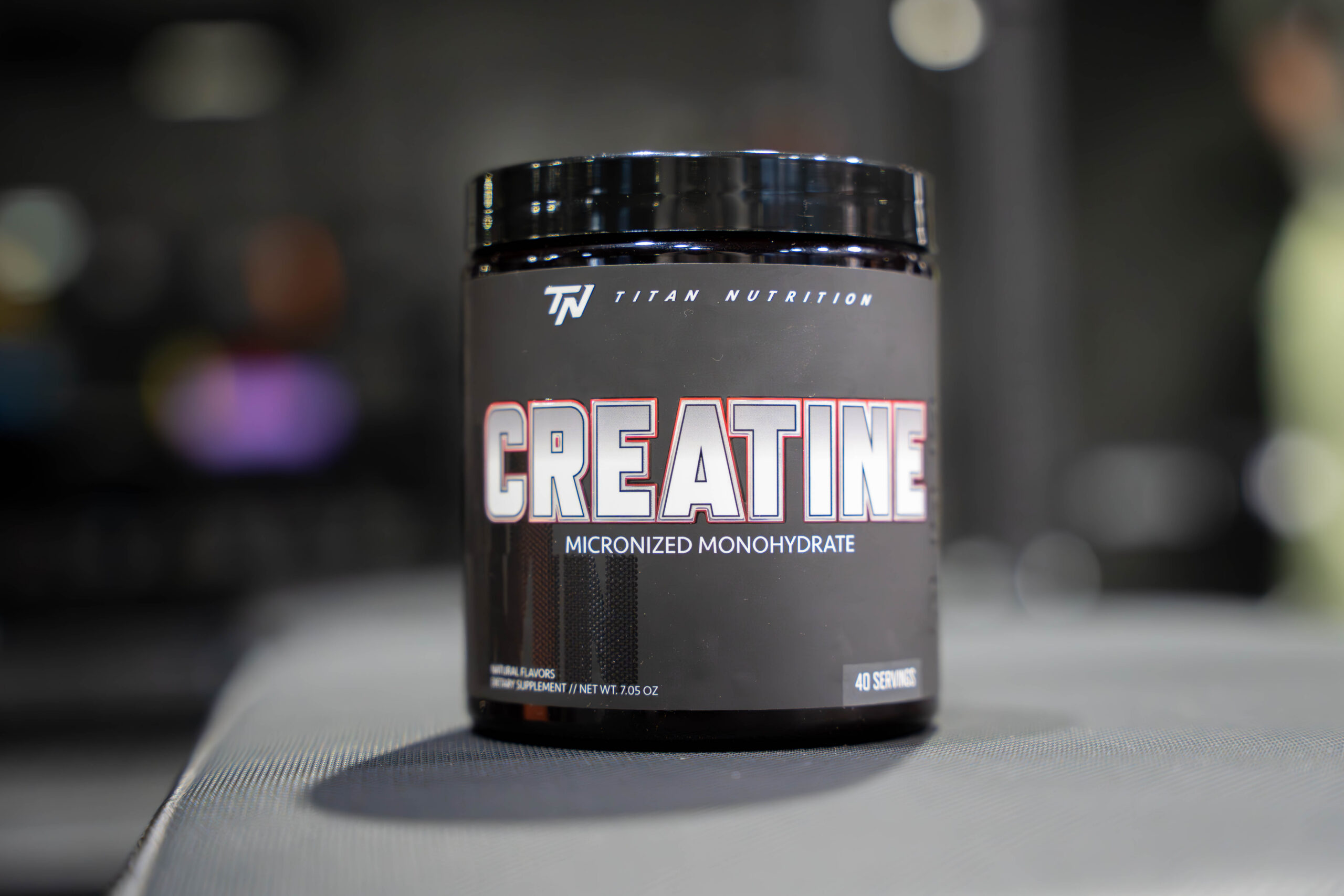
Want a high-quality, third-party-tested creatine? Check out my friends at Titan Nutrition, where they carry the Creatine that I use (and more!) at a 20% discount. —> Click HERE for CREATINE!
(Discount should automatically apply, not a sponsored post but I do receive a small affiliate commission)
Let me know—are you already taking creatine, or is this new info making you rethink it? Drop a comment, shoot me a DM on Instagram (@coachmusclenugget) if you have any questions!
Interested in a customized plan for your goals? Reach out! I’d love to see what we can do for you. 🙂
As always, thank you for spending your time with me – BE WELL!
Britt Larson

Disclaimer: The information provided in this article is for educational purposes only and should not be considered medical advice. Consult with a qualified healthcare provider before starting any new supplement, especially if you have existing health conditions or are taking other medications. Individual needs and responses to supplements can vary.
Citations & References
- Creatine and Muscle Recovery
- Rawson, E. S., & Venezia, A. C. (2011). “Use of creatine in the elderly and evidence for effects on cognitive function in young and old.” Aging and Disease, 2(3), 215–226.
- Link: https://nsuworks.nova.edu/neurosports/vol1/iss1/6/
- Creatine and Cognitive Function
- McMorris, T., Mielcarz, G., Harris, R. C., Swain, J. P., & Howard, A. (2007). “Creatine supplementation and cognitive performance in elderly individuals.” Neuropsychology, Development, and Cognition, 14(5), 517–528.
- Link: https://www.nature.com/articles/s41598-024-54249-9
- Creatine and Mood/Mental Health
- Roitman, S., Green, T., Osher, Y., Karni, N., & Joseph, A. (2007). “Creatine monohydrate supplementation and major depressive disorder: A double-blind, placebo-controlled trial.” Journal of Affective Disorders, 101(1-3), 231–235.
- Link: https://www.gq.com/story/creatine-energy-endurance-recovery
- Creatine and Aging/Cellular Health
- Gualano, B., Roschel, H., Lancha, A. H., Brightbill, C. E., & Rawson, E. S. (2012). “Creatine supplementation in aging and disease: Practical considerations and future research directions.” Journal of the International Society of Sports Nutrition, 9, 33.
- Link: https://jissn.biomedcentral.com/articles/10.1186/s12970-017-0173-z
- Creatine and Gut Health/Inflammation
- Wallimann, T., Tokarska-Schlattner, M., & Schlattner, U. (2011). “Creatine in health and disease.” Biochimica et Biophysica Acta (BBA) – Molecular Cell Research, 1812(5), 635–641.
- Link: https://jissn.biomedcentral.com/articles/10.1186/s12970-017-0173-z
- Creatine and Blood Sugar Control
- Gualano, B., de Salles Painelli, V., Roschel, H., Lugaresi, R., Dorea, E., Artioli, G. G., Otaduy, M. C. G., & Lancha, A. H. (2010). “Creatine in type 2 diabetes: A randomized, double-blind, placebo-controlled trial.” Medicine & Science in Sports & Exercise, 42(7), 1391–1400.
- Link: https://www.gq.com/story/creatine-energy-endurance-recovery
- Creatine Dosing and Effectiveness
- Kreider, R. B., Kalman, D. S., Antonio, J., Ziegenfuss, T. N., Wildman, R., Collins, R., Candow, D. G., Kleiner, S. M., Almada, A. L., & Lopez, H. L. (2017). “International Society of Sports Nutrition position stand: Safety and efficacy of creatine supplementation in exercise, sport, and medicine.” Journal of the International Society of Sports Nutrition, 14, 18.
- Link: https://jissn.biomedcentral.com/articles/10.1186/s12970-017-0173-z
- Creatine and Kidney Function
- Poortmans, J. R., & Francaux, M. (1999). “Long-term oral creatine supplementation does not impair renal function in healthy athletes.” Medicine & Science in Sports & Exercise, 31(8), 1108–1110.
- Link: https://jissn.biomedcentral.com/articles/10.1186/s12970-017-0173-z